The Liberty Bell Guide
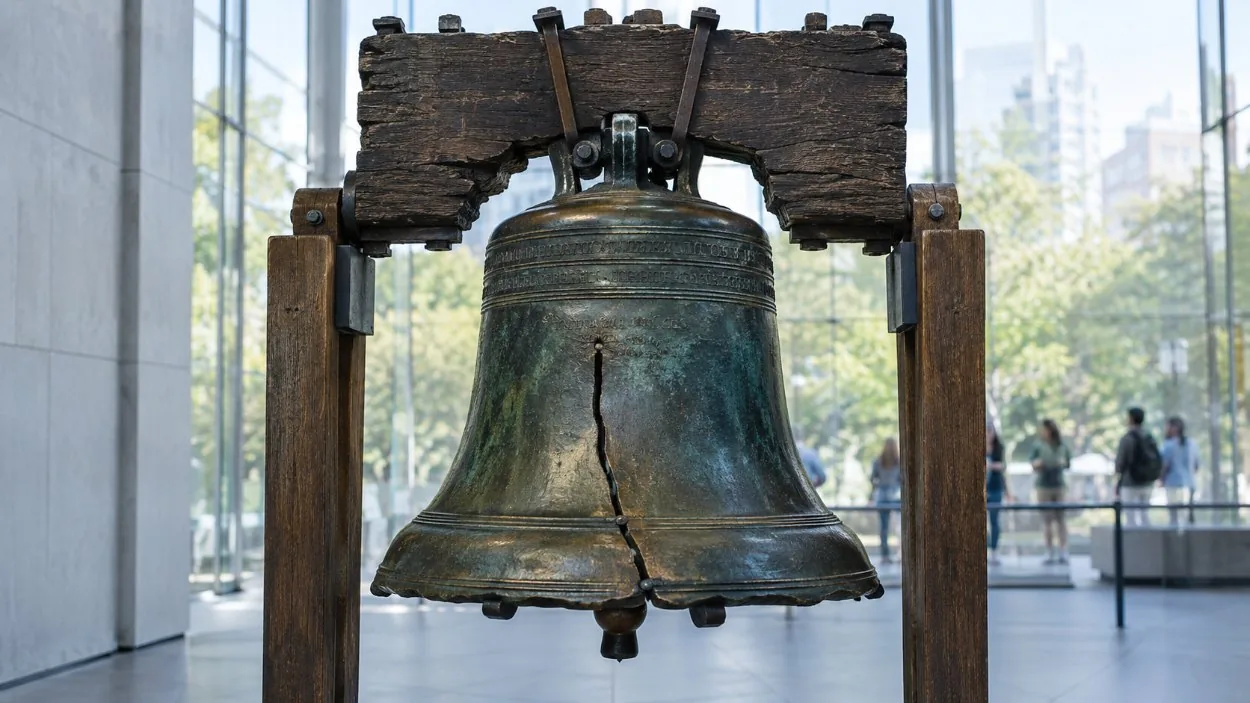
The Liberty Bell is a bronze bell of 2,080 pounds, recast in Philadelphia in 1753 and silent since February 1846, on display at the Liberty Bell Center in Independence National Historical Park; according to the National Park Service, admission is free and no tickets are required.
Where it is and how entry works
The Liberty Bell Center is at 526 Market Street, on Independence Mall between the Independence Visitor Center and Independence Hall. The NPS lists it as open daily 9 am to 5 pm, with security screening closing shortly before, and advises checking nps.gov before visiting. Its own wording is direct: “Admission is FREE” and “NO tickets are required. Entrance is first-come, first-served.”
All visitors and belongings are screened, by x-ray or visual inspection and metal detectors. Firearms, knives, explosives and other weapons are prohibited, as are open containers of food or drink (NPS). The line waits outside in an uncovered area, and Visit Philadelphia suggests an umbrella if rain is forecast. The NPS lists a visit at 15 to 55 minutes, with variable waits. A local visitor guide reports waits of up to two hours from May to mid-June, when school groups visit, and suggests arriving before the 9 am opening or after about 1 pm. More on wait times.
The bell can also be seen without the line. It is visible through the large windows on Chestnut Street at any time of day or night, and Visit Philadelphia describes a side alcove on the building’s east side “where the Bell is visible through a window, perfect for taking a Bell-fie”. The options are on seeing it without waiting.
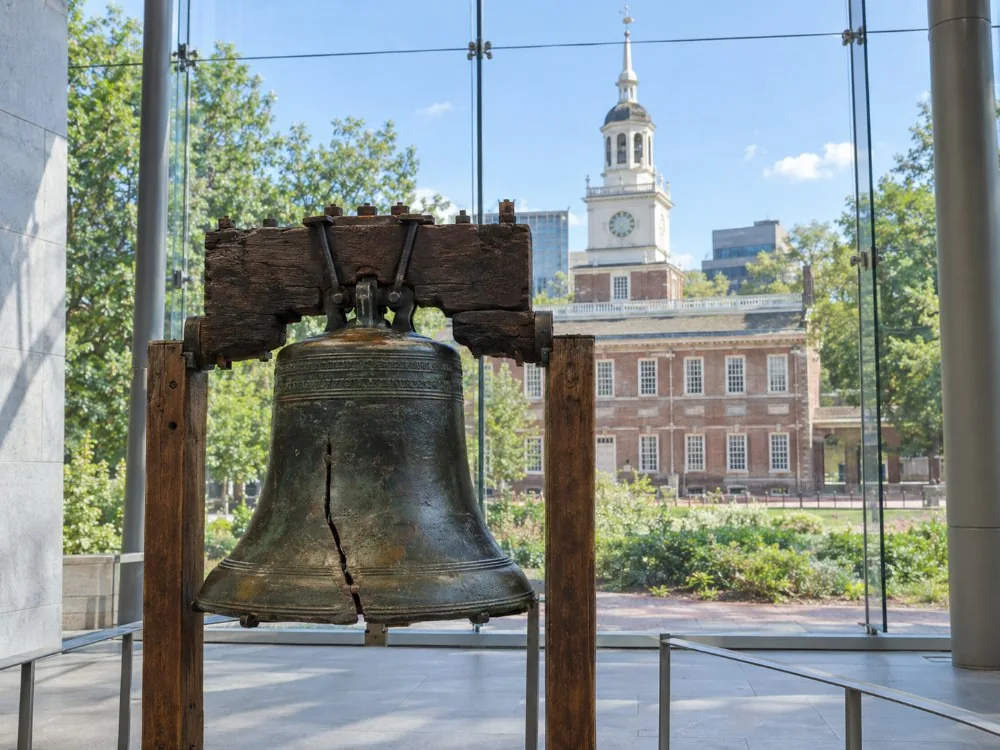
Inside the Liberty Bell Center
Self-guided exhibits along the hallway follow the bell’s history “through its use by abolitionists and civil rights advocates”, in the words of the NPS. A video runs with open captions and audio description, assistive listening devices are available, and written information comes in “a dozen languages”. The building is wheelchair accessible. There are no restrooms inside; the nearest are at the Independence Visitor Center, 6th and Market Streets.
The bell cannot be touched, but the exhibit has a casting of the inscription that visitors are encouraged to touch, according to the NPS and Visit Philadelphia. The full visit is described on the Liberty Bell Center page.
How the bell was made
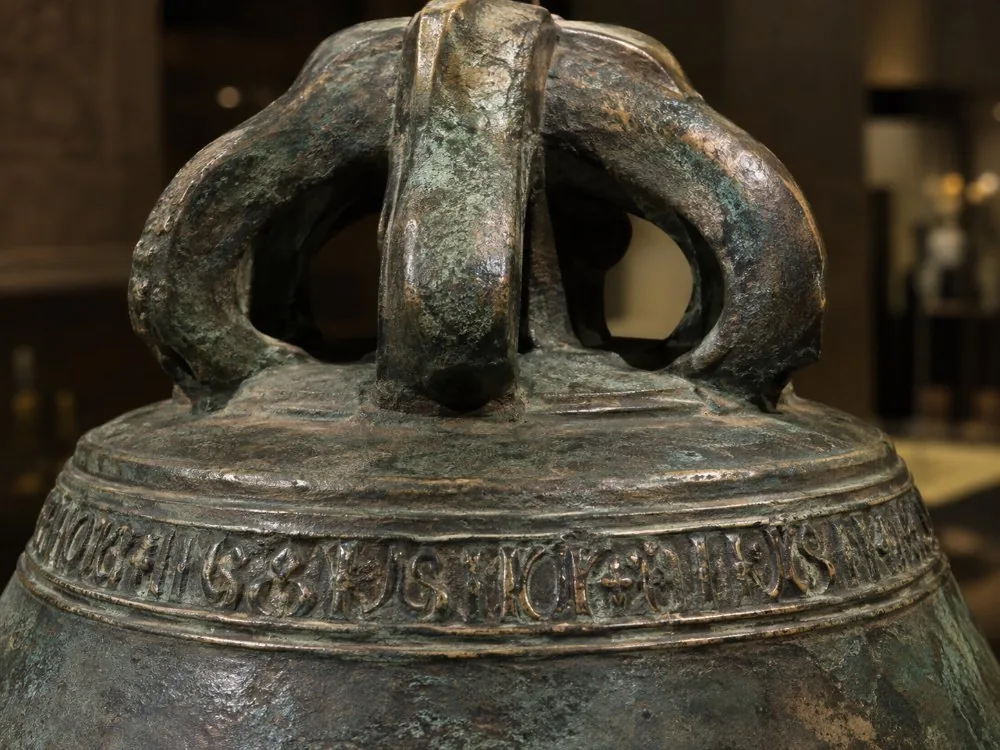
In 1751 Isaac Norris, Speaker of the Pennsylvania Assembly, ordered a bell from the Whitechapel Foundry in London for the bell tower of the State House, now Independence Hall. It cracked on first use. Two local craftsmen, John Pass and John Stow, melted it down and cast a new bell in Philadelphia, completed in 1753 and marked “Pass and Stow Philada MDCCLIII” (NPS). The metal is bronze, about 70% copper and 25% tin, with small amounts of lead, gold, arsenic, silver and zinc, and the bell weighed 2,080 pounds at order. It hangs from its original yoke of American elm.
The inscription reads “Proclaim LIBERTY throughout all the Land unto all the Inhabitants thereof Lev. XXV X”, from Leviticus 25:10, and “By Order of the ASSEMBLY of the Province of PENSYLVANIA for the State House in Philada”. The single n in “Pensylvania” was an accepted spelling at the time; Alexander Hamilton used it on the Constitution’s signature page in 1787. More on the inscription and who made the bell.
The crack, the silence and the name
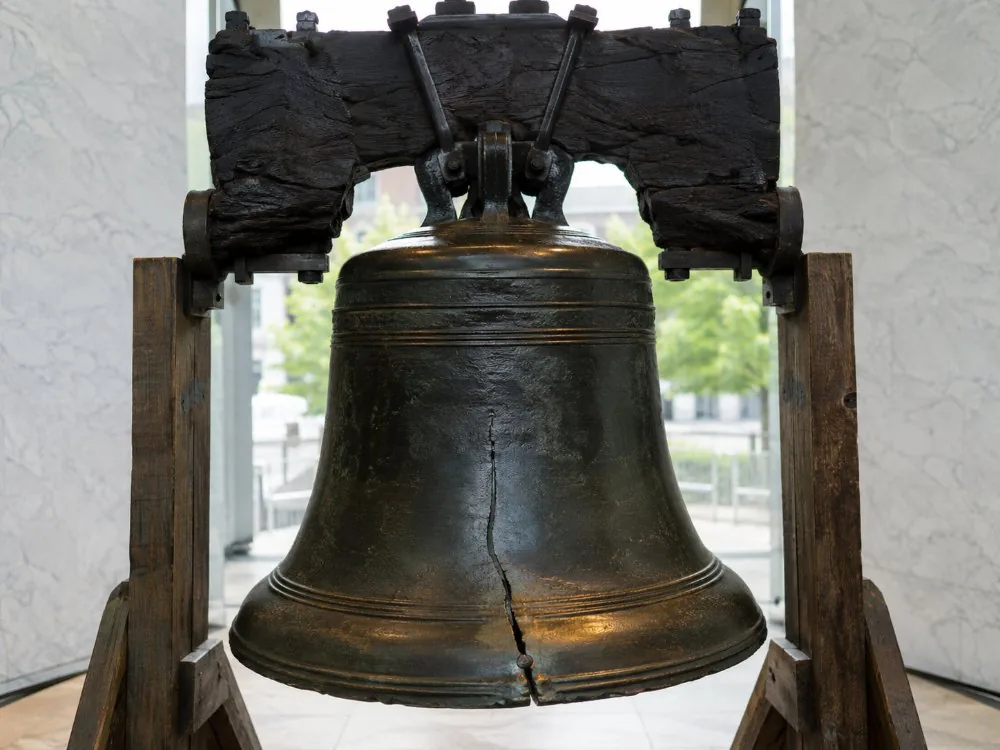
By the 1840s the bell had cracked, after about 90 years of use (NPS). In 1846 the sides of the crack were filed wide so the edges would not vibrate against each other, which is the broad gap visitors see today. When the bell was rung for Washington’s Birthday in February 1846, a second, thin crack ran “from the abbreviation for ‘Philadelphia’ up through the word ‘Liberty’”, which “silenced the bell forever”, according to the NPS. Details on the crack.
The name came later than many visitors assume. “The Anti-Slavery Record, an abolitionist publication, first referred to the bell as the Liberty Bell in 1835” (NPS). Historians have found no evidence that it rang on 4 July 1776, and they think it was probably among the bells rung when the Declaration was read publicly on 8 July 1776. Each July 4, descendants of the signers of the Declaration tap the bell 13 times, once for each of the 13 original colonies, in the afternoon; the NPS and local news publish the time. More on the bell on July 4th and the history of the bell.
From the State House to Market Street
From the late 1800s the bell travelled to expositions and fairs (NPS); in 1915 it went by train to an exposition in San Francisco. For the Bicentennial in 1976 it moved to a glass pavilion on Independence Mall, and on 9 October 2003 it was installed in the Liberty Bell Center, with tighter security following a 2001 attack on the bell by a visitor with a hammer.
The ticket across the street
Independence Hall, on Chestnut Street between 5th and 6th Streets, is where the Declaration of Independence (1776) and the US Constitution (1787) were signed, and it was inscribed as a UNESCO World Heritage Site in 1979. Per the NPS hours page, it holds an open house from 9 to 10:30 am with no tickets, then tours every 20 minutes from 10:40 am to 4 pm with tickets, plus a 4:20 pm expanded tour that includes the second floor and is not wheelchair accessible. The tickets are free and reserved on recreation.gov or by phone, up to 30 days ahead, with a small reservation fee per ticket shown there; “any tickets not booked will be available up until the time of the tour”. The NPS asks visitors to arrive 30 minutes before the tour for screening. The steps are on Independence Hall tickets.
What is bookable
The bell itself is free, so there is no entry to buy. Six products sit around it, each described here from its own listing:
- On foot by day. The Revolution and Founders history tour is a 2-hour walk with a historian guide from the Independence Visitor Center, and its listing includes Independence Hall timed tickets. The history highlights walk takes 2.5 hours from Signers Garden through Old City, with a listed stop at the Liberty Bell and a demonstration at the Museum of the American Revolution.
- By vehicle. The hop-on hop-off bus runs a 90-minute loop with the Liberty Bell as one of its stops, on a ticket valid 1, 2 or 3 days. The full-day trip from New York lists 20 minutes at the Liberty Bell within a 15-hour day that continues to Washington, D.C.
- Indoors and after dark. Museum of the American Revolution admission is valid for 2 consecutive days. The ghost tour by candlelight is an evening walk of about 90 minutes in the same park; its listing does not mention the Liberty Bell.
Each of the six listings states free cancellation up to 24 hours before. The six are set out together on the tours page, and the nearest SEPTA station, 5th Street/Independence Hall on the L, is covered on how to get there.
Ready to book
The two-hour history walk whose listing includes Independence Hall timed tickets is below with live dates. The tours page sets all six side by side, and which tour for which visit matches them to the time available and the kind of visit.
Frequently asked questions
Do you need a ticket to see the Liberty Bell?
No. The National Park Service states that admission is free and no tickets are required; entrance is first come, first served, after a security screening. See do you need tickets.
How long does a visit to the Liberty Bell take?
The NPS lists a visit at 15 to 55 minutes, plus the wait in line, which varies by season and time of day. See wait times.
Does Independence Hall need a ticket?
Its guided tours do: a free timed ticket reserved on recreation.gov, with a small reservation fee per ticket. From 9 to 10:30 am there is an open house with no ticket, per the NPS. See Independence Hall tickets.