Liberty Bell Replicas
The one original
The original bell was ordered in 1751 by Isaac Norris, Speaker of the Pennsylvania Assembly, from the Whitechapel Foundry in London, for the State House bell tower. It cracked on first use, and two local craftsmen, John Pass and John Stow, melted it down and cast a new bell in Philadelphia, completed in 1753 and marked “Pass and Stow Philada MDCCLIII” (NPS). That bell, bronze of about 70% copper and 25% tin, weighed 2,080 pounds at order, and hangs from its original yoke of American elm (Wikipedia). It has been in the Liberty Bell Center since 9 October 2003, open daily from 9 am to 5 pm and free, according to the NPS. The real Liberty Bell page covers where it has been kept, and the who made it page covers its casting.
The 1950 replicas
In 1950, dozens of full-size replicas were cast in France for the Treasury Department, one for each state, for Washington, D.C. and for the territories (Wikipedia).
The Centennial Bell
For the 1876 centennial of the Declaration, a much larger replica was made: the Centennial Bell, about 13,000 pounds. It is now attached to the clock in Independence Hall’s steeple (Wikipedia). So to the question “are there two Liberty Bells”, the answer is one original, replicas in many places, and the Centennial Bell in the Independence Hall tower, which is a different bell from the one in the glass-walled Liberty Bell Center across Chestnut Street. The Independence Hall page covers visiting the building beneath the steeple.
The replica visitors can touch
Visitors cannot touch the original. Inside the Liberty Bell Center, the exhibit has a casting of the inscription that visitors are encouraged to touch (NPS; Visit Philadelphia). The inscription page gives the full wording.
Telling them apart
- The original shows the widened 1846 repair gap and, according to the NPS, a second, thin crack running up through the word “Liberty”.
- The 1950 replicas are full size and were cast for the states and territories.
- The Centennial Bell is far heavier than the original and hangs in a tower rather than on display at ground level.
The steeple that holds it
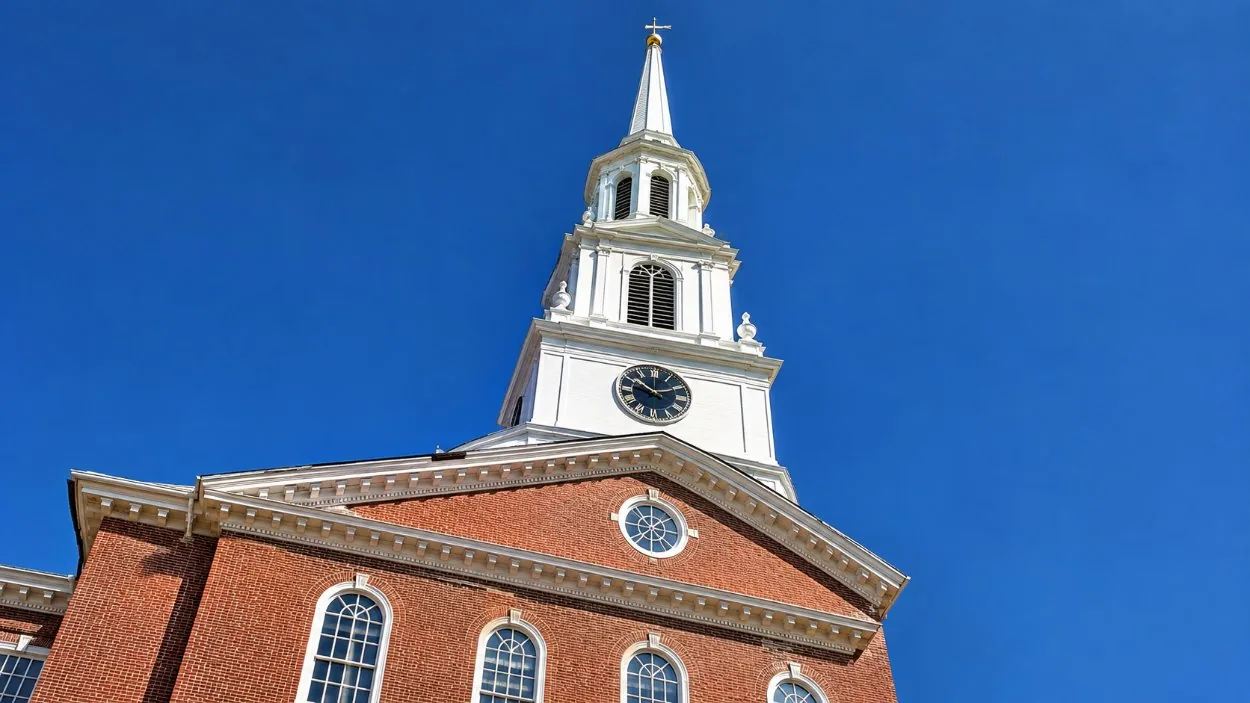
The Centennial Bell is attached to the clock in the steeple rather than on display like the original. The tower is part of Independence Hall on Chestnut Street between 5th and 6th Streets. Entering the building is a separate matter: per the NPS hours page, Independence Hall holds an open house from 9 to 10:30 am without tickets, then guided tours every 20 minutes from 10:40 am to 4 pm with a free timed ticket reserved on recreation.gov, where a small reservation fee per ticket applies.
Independence Hall stands across Chestnut Street from the Liberty Bell Center exit, so the original bell and the steeple that holds the Centennial Bell can be seen within a few minutes of each other.
Frequently asked questions
Are there two Liberty Bells?
There is one original, in the Liberty Bell Center. Replicas exist in many places, and the Centennial Bell of 1876 hangs in the Independence Hall steeple.
Is the Liberty Bell in Philadelphia the real one?
Yes. The original is on display at 526 Market Street, free and without tickets (NPS).
Can the Liberty Bell be touched?
The original cannot. A casting of the inscription inside the Liberty Bell Center can. The touching page explains.
How many full-size replicas were made in 1950?
Dozens, cast in France for the states, Washington, D.C. and the territories (Wikipedia).